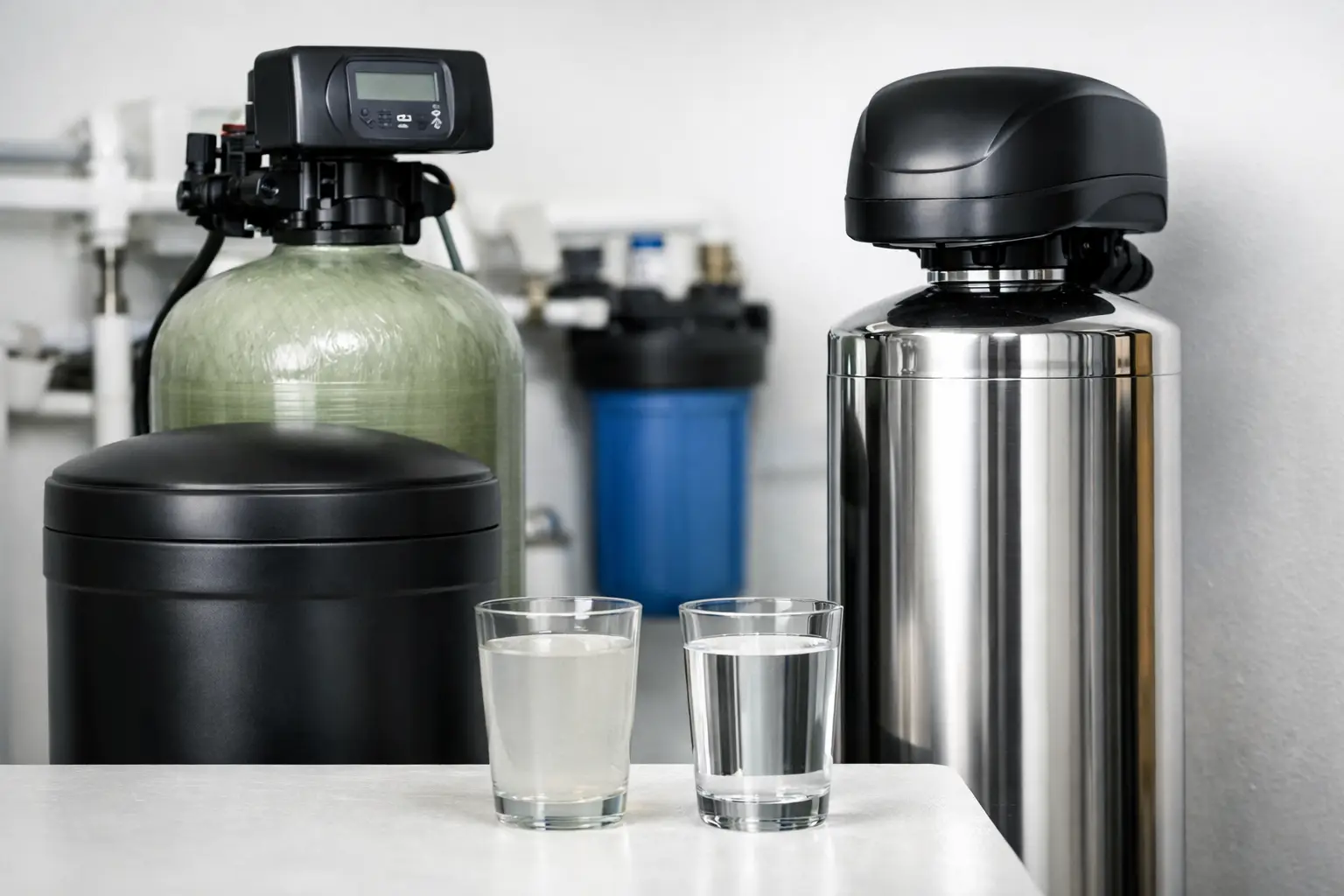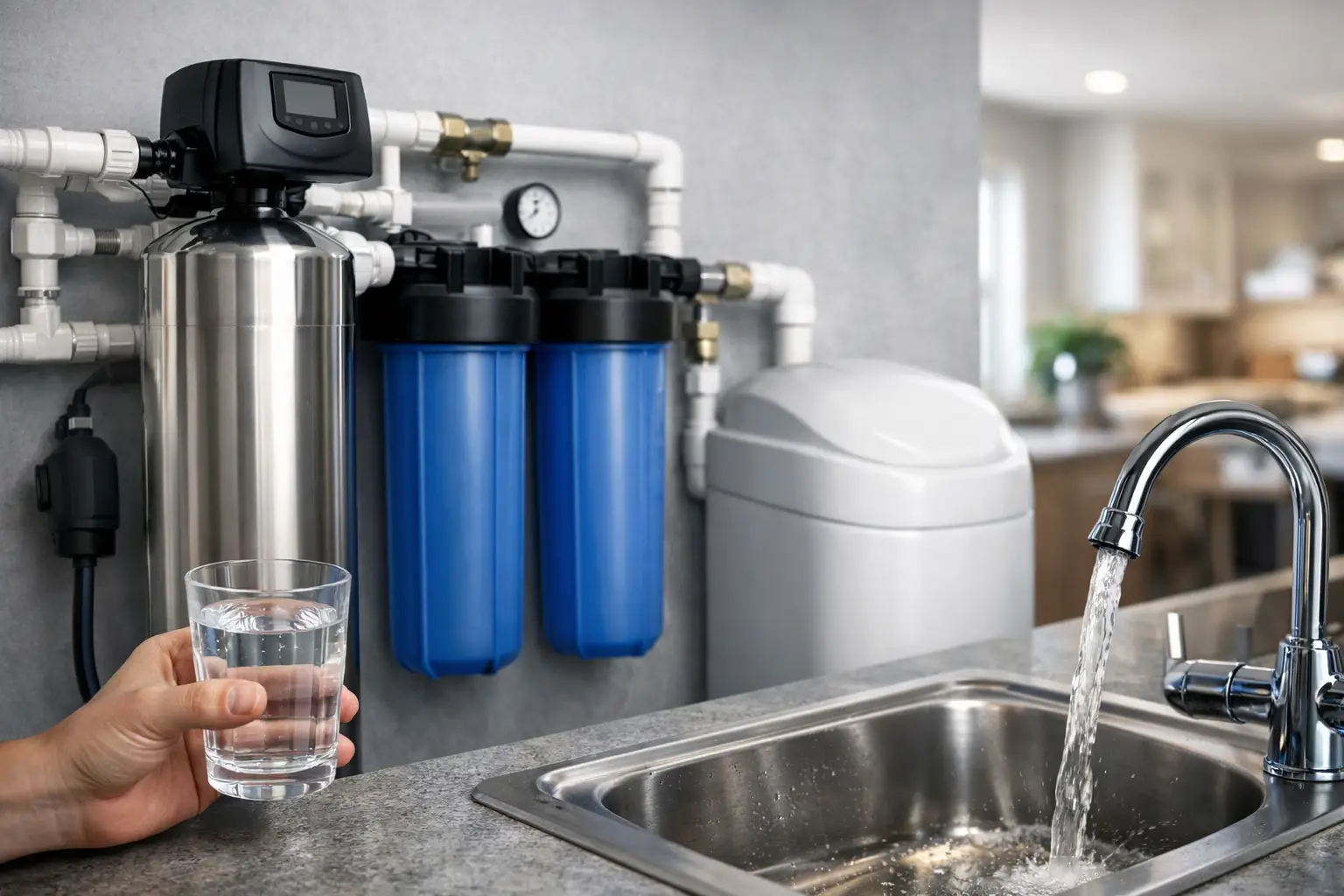

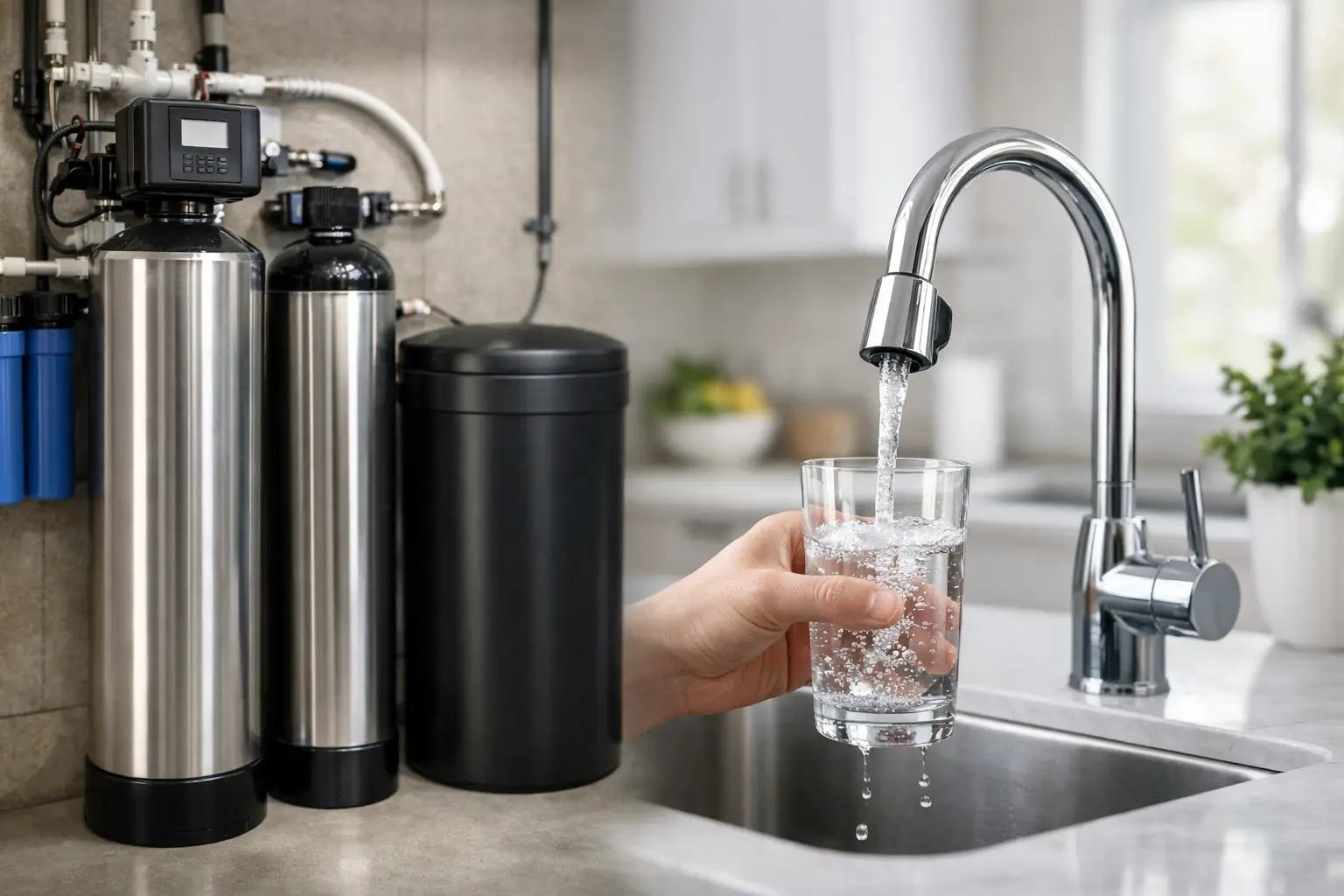
A lot of homeowners start looking for the best whole house water systems after one specific moment – white scale on a new shower door, chlorine smell in a bath, orange staining in sinks, or water that just never tastes right. That moment matters because it usually means the issue is not limited to one faucet. If your water problem shows up in showers, laundry, appliances, and drinking water, a whole-house solution often makes more sense than stacking point-of-use filters around the home.
The tricky part is that there is no single best system for every house. The right choice depends on your water source, the contaminants or nuisance issues you are dealing with, your plumbing flow rate, and whether you want filtration, softening, or both. Clean, great-tasting water should not be complicated, but it does require matching the system to the problem.
What makes the best whole house water systems actually best
The best systems do three things well. First, they target the real issue in your water rather than offering a one-size-fits-all promise. Second, they are sized correctly for your home so you do not lose pressure every time more than one fixture is running. Third, they are built to be maintained without turning ownership into a headache.
That means a great whole-house setup is not always the most expensive one. A family on city water with chlorine and sediment concerns may only need a properly sized carbon filtration system with pre-filtration. A homeowner on well water with hardness, iron, and sulfur odor may need a much more specialized setup that includes filtration media, oxidation strategy, and a softener. Price matters, but fit matters more.
Best whole house water systems by water problem
For chlorine, chloramine, and chemical taste
If your home is on municipal water, carbon filtration is usually the starting point. Standard activated carbon works well for chlorine, bad taste, and common odor issues. If your city uses chloramine instead of chlorine, catalytic carbon is often the better choice because chloramine is harder to reduce.
This is one of the most common reasons homeowners install a whole-house system. You notice the difference in shower smell, skin comfort, laundry, and general water taste. If your main complaint is that the water feels and smells overtreated, a whole-house carbon filter is often one of the best whole house water systems to consider.
For hard water and scale
A water softener is the right tool when your problem is hardness. Filtration and softening are not the same thing, and this is where many buyers get tripped up. A carbon filter will not prevent scale buildup on fixtures, inside pipes, or on heating elements. A true softener removes hardness minerals like calcium and magnesium and helps protect appliances, water heaters, dishwashers, and plumbing.
If your water leaves spots, dries out skin, and shortens the life of appliances, a softener usually delivers the biggest day-to-day improvement. Salt-free conditioners can help reduce scale adhesion in some homes, but they do not soften water in the same way. That trade-off matters if you want the feel and cleaning benefits that come with truly softened water.
For sediment and cloudy water
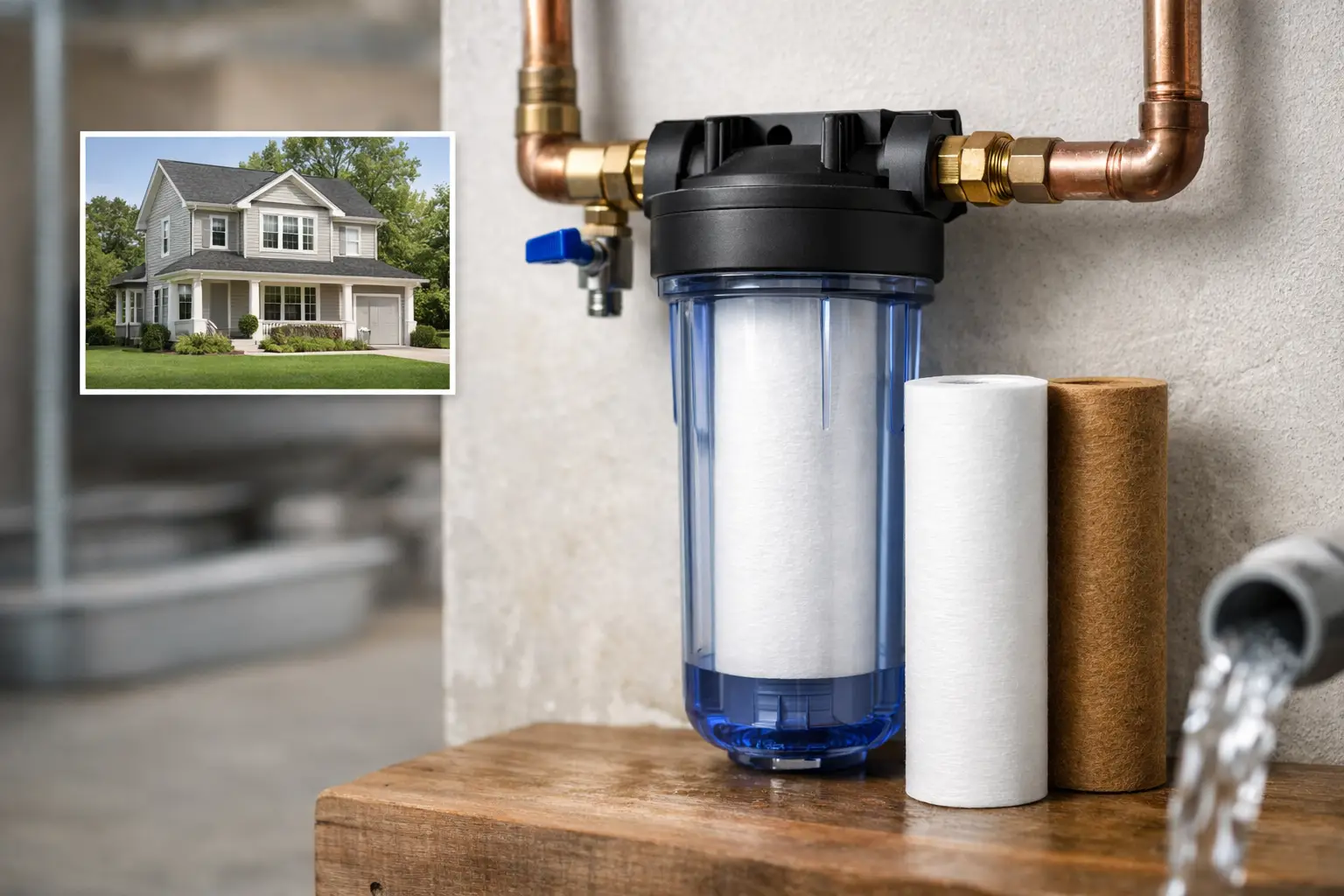
Sediment filtration is often the foundation of a whole-house system, especially for well water or older municipal lines. Sand, silt, rust, and suspended particles can clog fixtures, reduce filter life, and make water look dirty even when the deeper issue is relatively simple.
In some homes, sediment is the only real problem. In others, it is just the first stage. The best setup may include a spin-down or cartridge pre-filter followed by carbon filtration or a softener. If you skip sediment control when it is needed, the rest of the system may not perform the way it should.
For iron, sulfur, and staining on well water
Well water problems usually require more tailored equipment. Iron can stain sinks, tubs, and laundry. Sulfur can create a rotten egg smell. Manganese can cause dark staining and off tastes. These are not issues a standard city-water carbon system is designed to fix.
Depending on the water chemistry, the best whole house water systems for well water may include oxidizing filters, specialty media, air injection, or combinations with a softener. It depends on how much iron is present, what form it is in, whether sulfur is involved, and whether pH is affecting treatment performance. This is where water testing becomes especially important, because two homes with similar smells can need very different solutions.
For health-driven contaminant reduction
Some homeowners are primarily focused on reducing contaminants such as arsenic, nitrates, bacteria, fluoride, or other specific concerns. In these cases, a whole-house system may be part of the answer, but not always the complete answer.
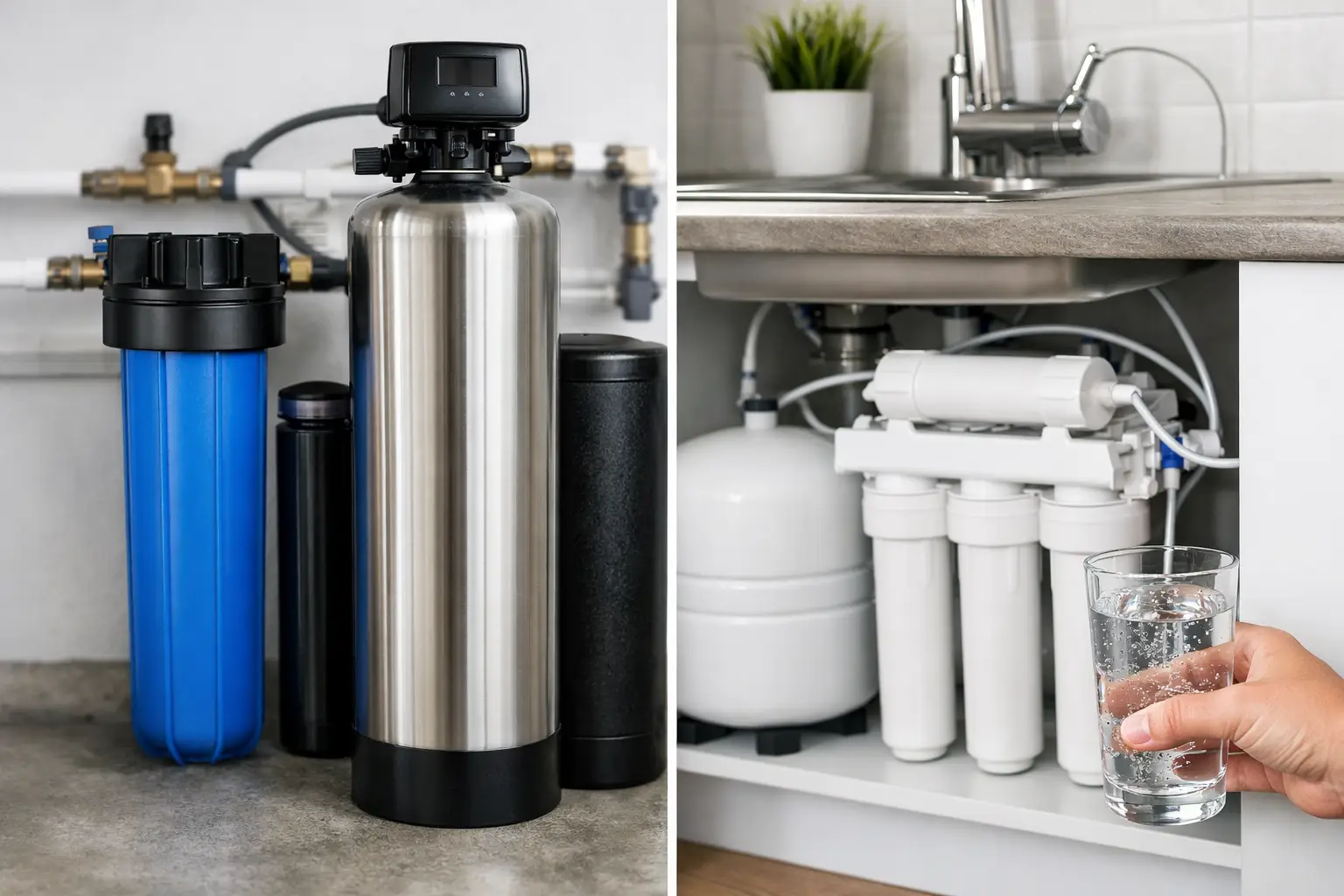
For example, whole-house carbon is excellent for broad chlorine and chemical reduction, but reverse osmosis is often the better choice for drinking water contaminants that require finer treatment. Many homes benefit from a combined approach: whole-house filtration for the entire home and a dedicated drinking water system at the kitchen sink. If your goal is both comfort and higher-level drinking water treatment, this combination often makes the most practical sense.
How to choose the right system for your home
Start with your water source. City water and well water are different categories, and the best recommendation usually changes immediately based on that answer. After that, narrow the issue. Are you trying to solve hardness, odor, bad taste, staining, visible particles, or a contaminant concern based on testing?
Next, look at flow rate and home size. A system that is undersized can create pressure loss, especially in larger homes with multiple bathrooms. Bigger is not always better, but correct sizing is essential. This includes the tank size, media volume, service flow rate, and regeneration capacity if you are considering a softener.
Maintenance should also be part of the decision, not an afterthought. Cartridge systems need filter changes. Softeners need salt unless you choose a salt-free conditioner. Specialty well-water systems may need periodic service depending on the media and the water conditions. The best system is one you can realistically maintain, because neglected equipment does not deliver clean water for long.
Common mistakes homeowners make
One of the biggest mistakes is buying based on the word filter alone. Filtration sounds universal, but water treatment is specific. A chlorine filter is not a hardness solution. A softener does not remove every contaminant. A drinking water RO system does not protect showers, laundry, or appliances.
Another mistake is skipping testing and guessing from symptoms. Water can smell metallic for more than one reason. Staining can come from iron, manganese, or even plumbing-related issues. If you choose equipment based only on online reviews, you may end up treating the wrong problem.
Homeowners also sometimes overbuy. Not every home needs a complex multi-stage setup. If you have straightforward municipal water with chlorine and no hardness issue, a properly sized whole-house carbon system may be all you need. On the other hand, some people underbuy and try to solve major well-water issues with basic sediment cartridges that were never designed for iron or sulfur.
When a bundled system makes more sense
In many homes, the best answer is not one product but a matched system. A common example is sediment filtration plus carbon filtration on city water, or sediment filtration plus iron treatment plus softening on well water. Bundled systems can reduce guesswork because the components are designed to work together rather than patched together over time.
That is often where expert guidance adds real value. A consultative approach can keep you from paying for features you do not need while making sure the system covers the issues you actually have. For homeowners who want clear answers without the usual sales pressure, that difference matters. It is one reason companies like Authentic Water USA focus on matching systems to real household water problems instead of pushing a generic package.
What homeowners should expect after installation
A good whole-house system should improve daily life in noticeable ways. Water may smell cleaner, taste better, feel less harsh on skin and hair, and leave less residue on fixtures depending on the treatment type. Appliances may perform better and last longer if hardness or sediment was the root problem.
But expectations should still be realistic. A carbon system will not create soft water. A softener will not replace a drinking water RO if you are trying to reduce certain dissolved contaminants at the tap. The best outcomes happen when the system goals are clearly defined from the start.
If you are comparing the best whole house water systems, the smartest move is to stop asking which system is best in general and start asking which system is best for your water. That one shift usually leads to a better result, a better investment, and a home that feels better every day.