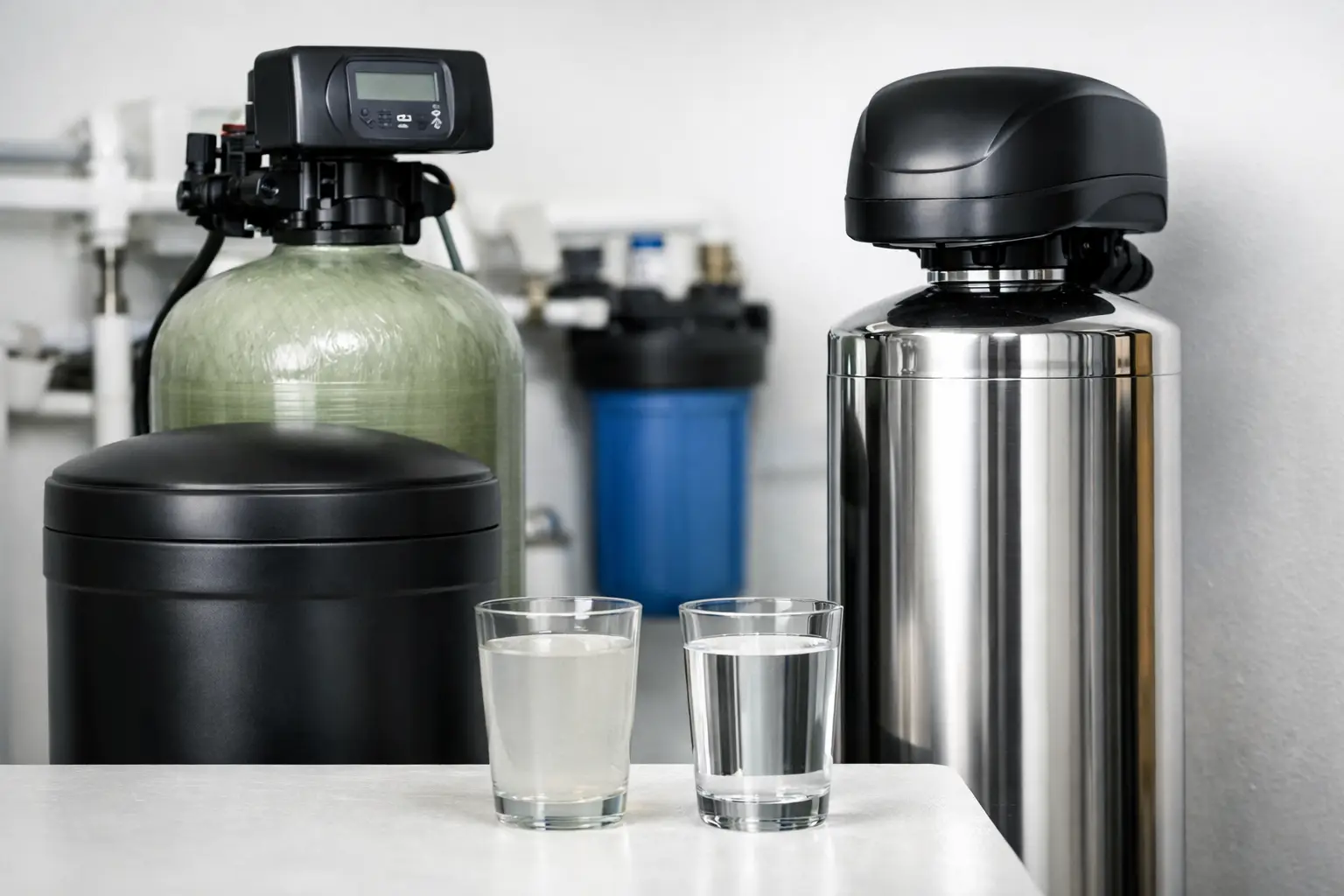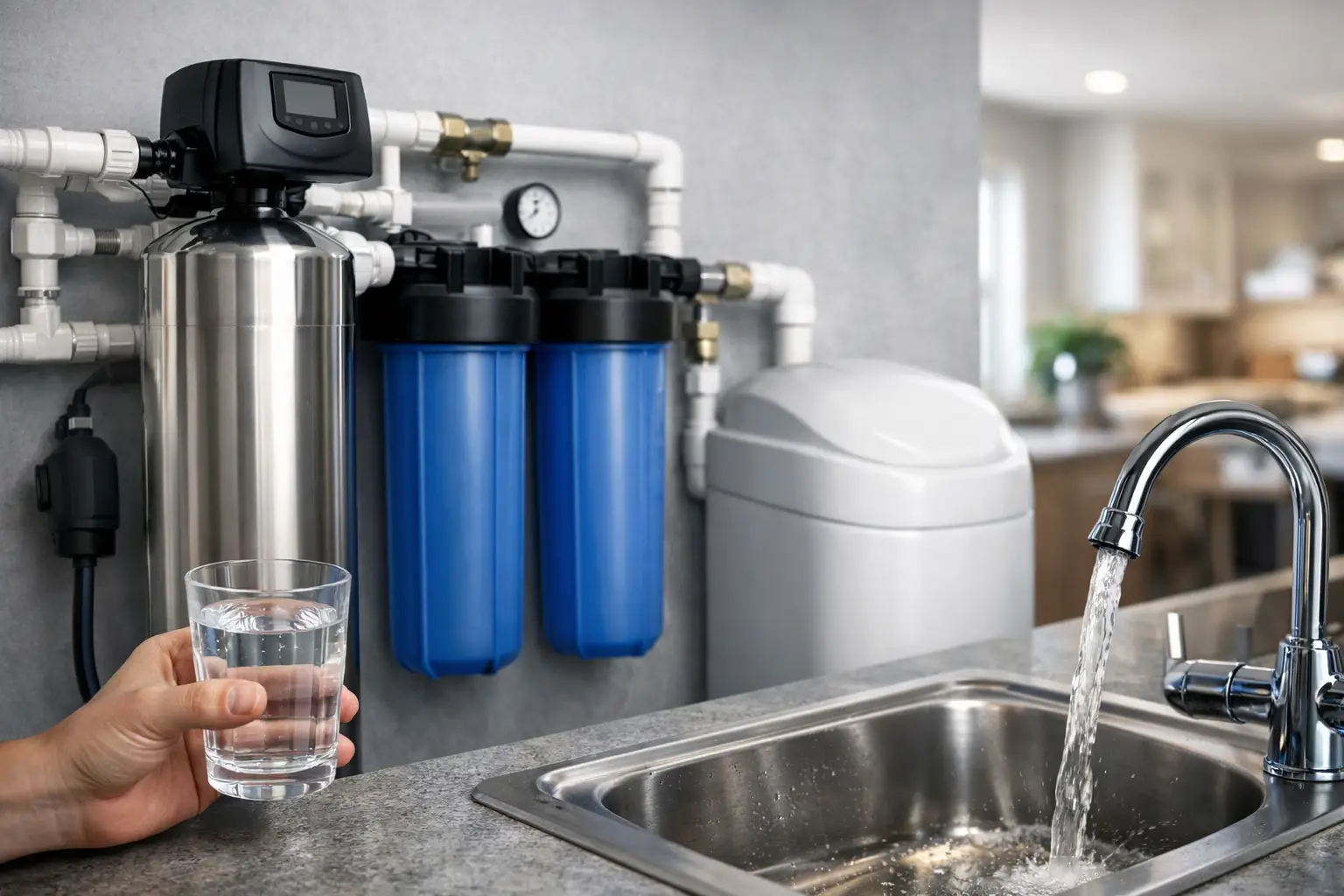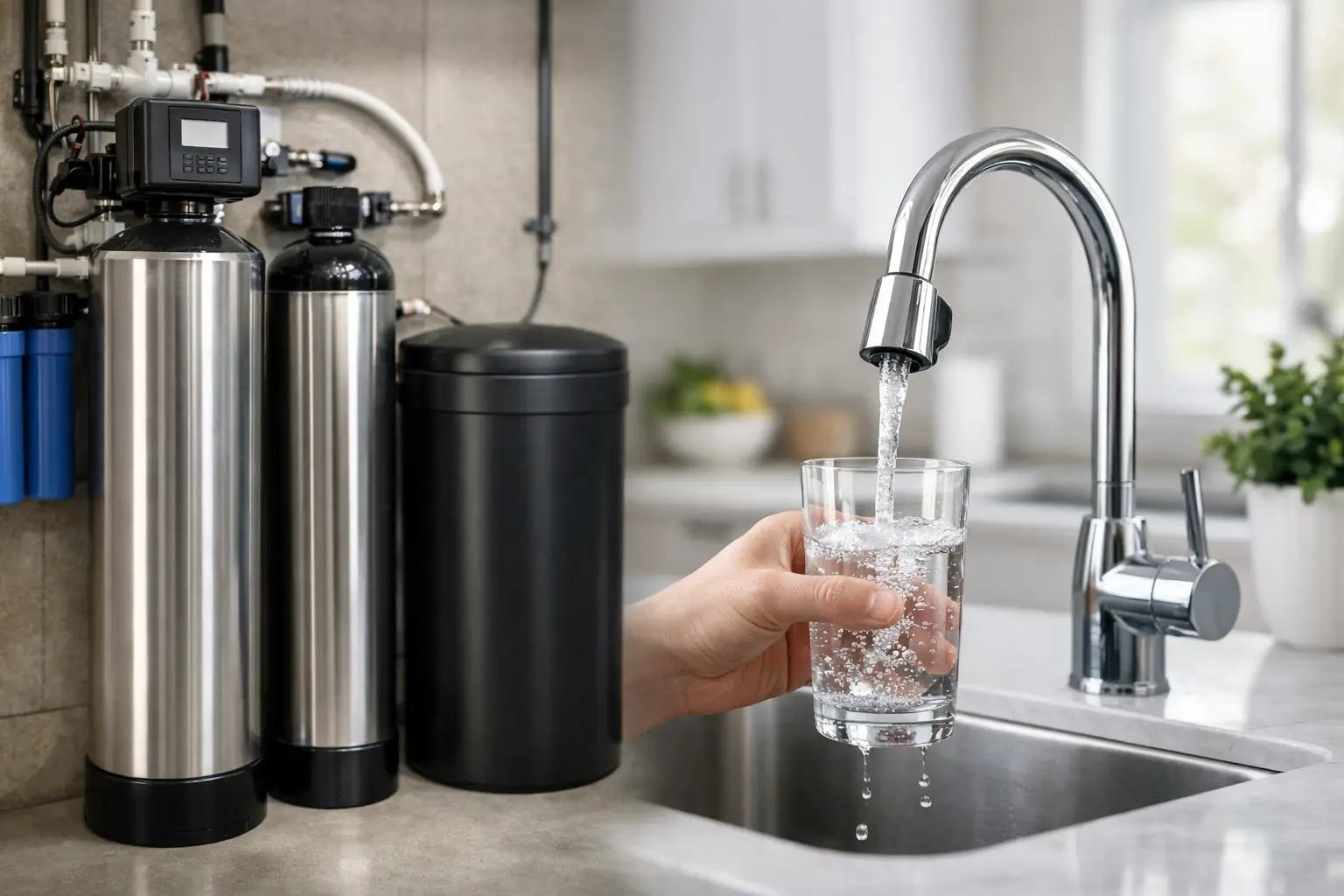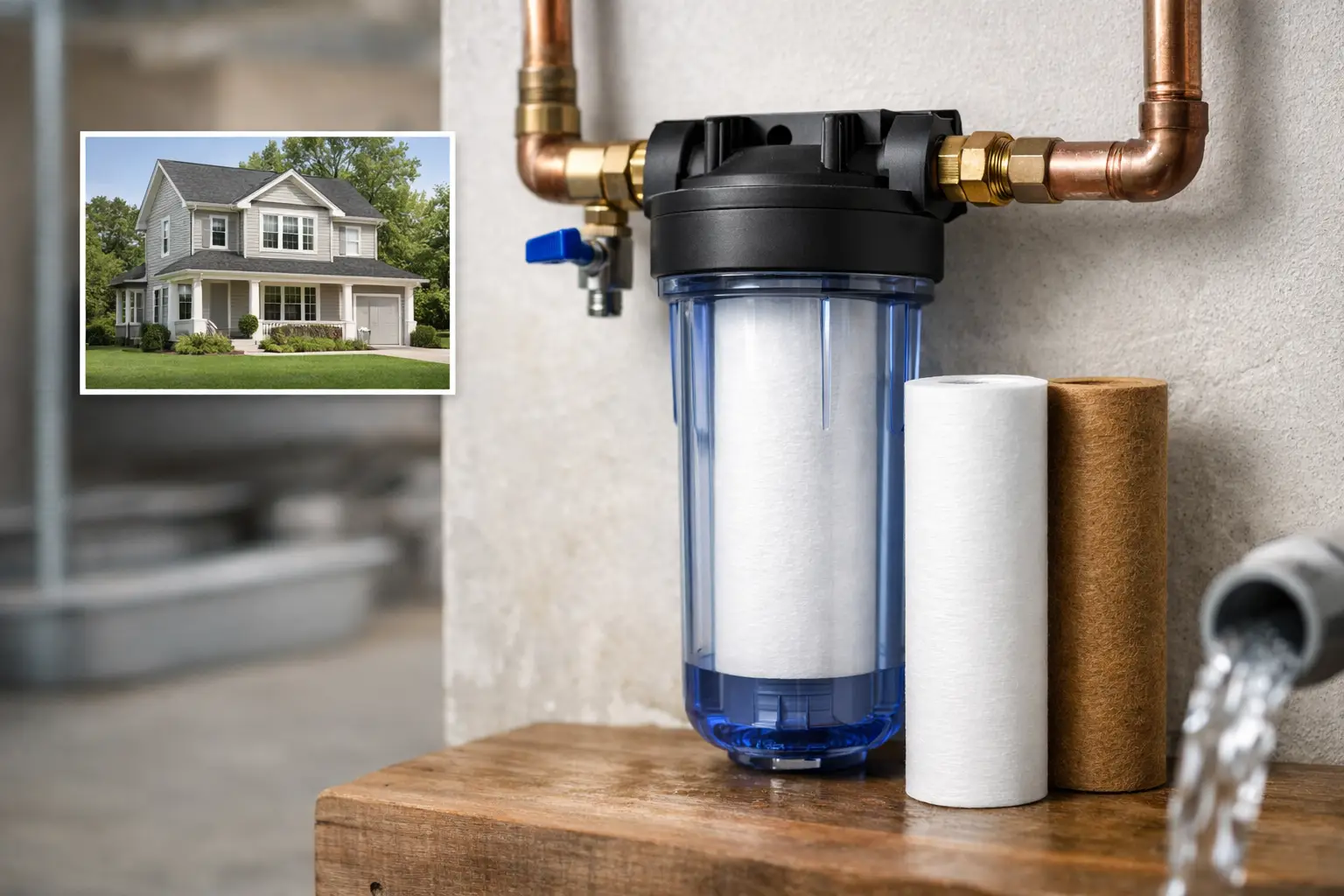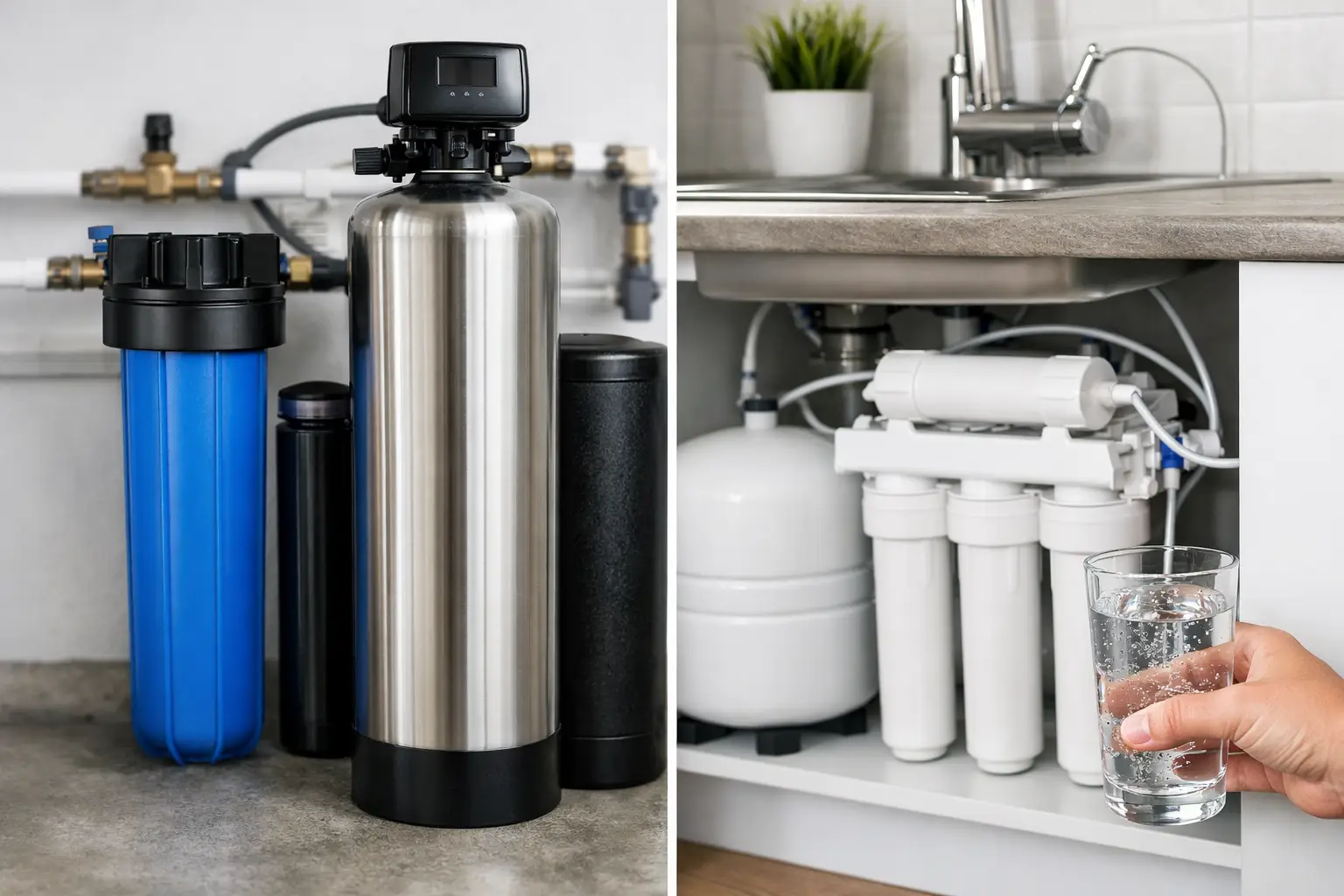

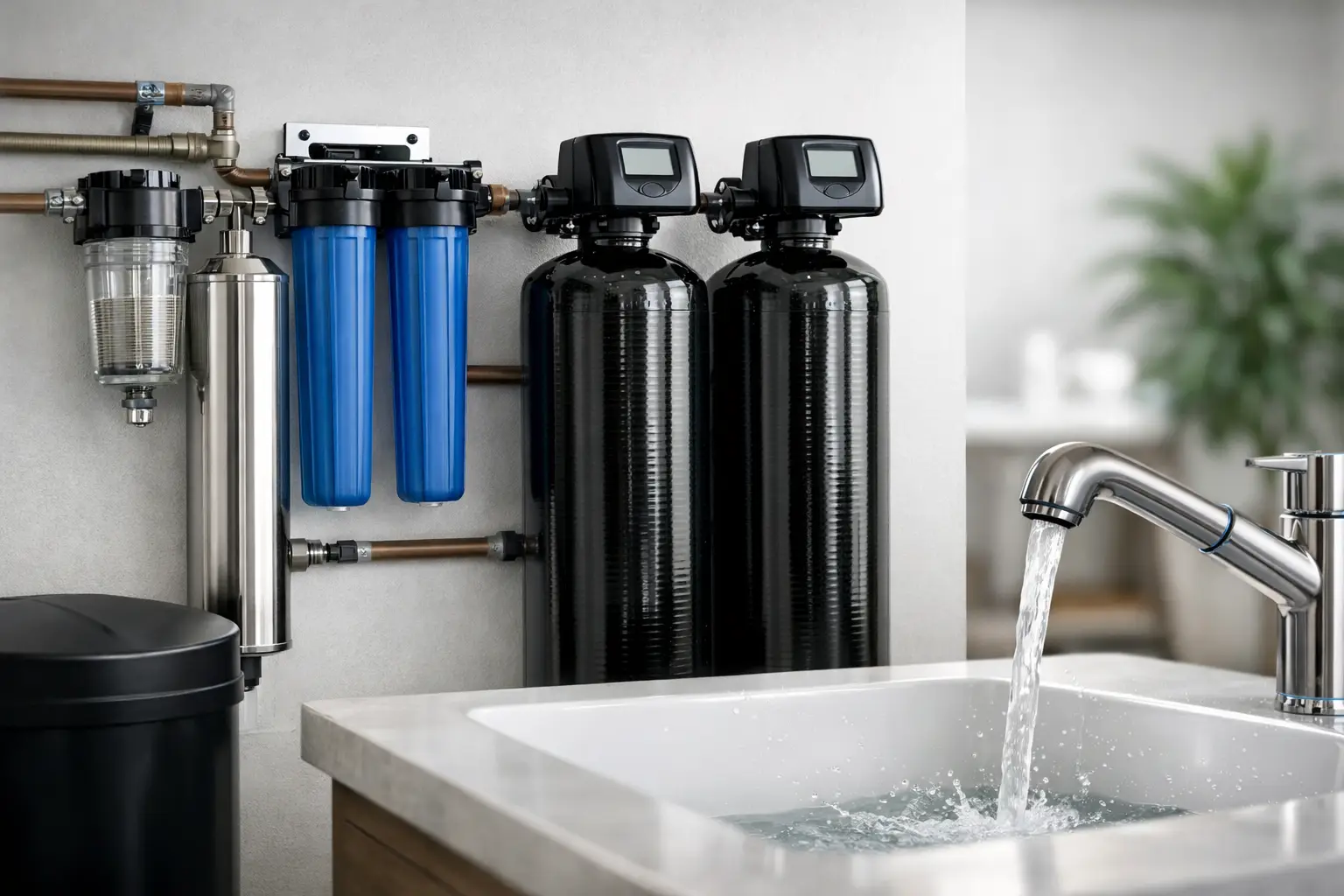
If your shower leaves your skin feeling tight, your dishes come out spotted, and your tap water has a chemical taste, you are likely dealing with more than one water problem at once. That is exactly where whole house water filtration systems with softener make sense. They are built to handle the two issues homeowners face most often: unwanted contaminants and hard water minerals.
A lot of people start with one symptom. Maybe it is scale on fixtures. Maybe it is chlorine smell in the shower. Maybe it is orange staining, cloudy glasses, or water that just does not feel clean. The challenge is that these problems often overlap, and a single product does not always solve all of them. A combined whole-home approach is usually the better answer when you want cleaner, better-tasting water throughout the house, not just at the kitchen sink.
What whole house water filtration systems with softener actually do
A whole-house filtration and softening setup treats water as it enters your home. That means the water going to your faucets, showers, laundry, water heater, and appliances is addressed before you use it. Instead of fixing one tap, it improves the entire plumbing system.
The filtration side is designed to reduce things that affect water quality, taste, smell, and comfort. Depending on the system, that can include chlorine, chloramine, sediment, iron, sulfur odors, and other problem contaminants. The softener side targets hardness minerals like calcium and magnesium, which are responsible for scale buildup, dry skin, stiff laundry, and reduced appliance efficiency.
That combination matters because filtration and softening do different jobs. A carbon filter may improve taste and reduce disinfectants, but it will not stop hard water scale. A softener can remove hardness, but it will not necessarily reduce chlorine taste, odor, or sediment. When both problems are present, pairing the two gives you more complete treatment.
Why homeowners choose a combined system
For many households, convenience is part of the appeal. One coordinated system is easier to understand than piecing together separate products without a clear plan. It also tends to create a more consistent water experience across the home.
The everyday benefits are easy to notice. Showers feel better. Soap rinses more cleanly. White residue on fixtures drops dramatically. Water heaters, dishwashers, and washing machines tend to work more efficiently when scale is under control. If your filtration media is chosen correctly, you may also notice better taste, less odor, and fewer issues related to sediment or discoloration.
There is also a long-term value piece. Hard water quietly wears on plumbing and appliances. Chlorine and other water issues can affect comfort and confidence. Treating water at the point it enters the home can reduce maintenance headaches and help protect expensive equipment.
Not every home needs the same setup
This is where many buyers get frustrated. The phrase whole house water filtration systems with softener sounds simple, but the right system depends on your actual water profile.
Municipal water and well water usually require different treatment strategies. City water commonly brings chlorine or chloramine, and sometimes sediment or taste issues. Well water may have hardness too, but it can also come with iron, sulfur, manganese, tannins, bacteria, low pH, or other concerns that require more specialized equipment.
That is why water testing matters. It keeps you from buying a system based on guesses, marketing claims, or a neighbor’s recommendation. A home with moderate hardness and strong chlorine odor needs a different solution than a home with high iron and sulfur smell. Even two houses on the same street can have different water conditions.
How the system is usually configured
Most combination setups follow a practical order. Water enters the home and may first pass through a sediment stage if there is sand, silt, rust, or debris present. Then it moves through a filtration tank, often using activated carbon or catalytic carbon depending on the disinfectants or contaminants involved. After filtration, the water goes through the softener, where hardness minerals are exchanged and scale-forming minerals are removed.
That order is not random. Filtration ahead of the softener can help protect the resin and improve overall performance. In some homes, especially with well water, the sequence can be more customized if iron, sulfur, or acidity needs to be addressed before the softener can work properly.
A well-designed system is less about buying the most expensive package and more about matching the right components to the water. That is where a consultative approach makes a real difference.
What to look for when comparing systems
The best system is not the one with the longest list of claims. It is the one sized correctly for your household and built to address your specific problems.
Flow rate is one of the first things to check. If a system is undersized, you may notice pressure drop during high-demand times. A family with multiple bathrooms, a large tub, and frequent laundry use has different needs than a smaller household. Media type matters too. Standard carbon can work well for chlorine, while chloramine often calls for catalytic carbon or a more specialized design.
Softener capacity should also match your water hardness and water usage. A unit that regenerates too often can waste salt and water. One that is too small may not keep up, especially in larger homes. Build quality, valve reliability, ease of maintenance, and access to expert support are all worth paying attention to.
Transparent pricing matters as well. Homeowners are right to be cautious when water treatment is presented as a mystery that only a sales pitch can decode. Clean, great-tasting water should not be complicated, and you should be able to understand what a system is doing and why it is recommended.
Common trade-offs to understand
There is no perfect system for every home, and honest advice should include that. Salt-based softeners are highly effective for hardness, but they do require salt refills and periodic maintenance. Some homeowners prefer salt-free conditioners, but those are not the same as true softeners and may not deliver the same scale reduction results in every application.
Whole-house carbon filtration is excellent for improving water quality throughout the home, but it is not a universal answer for heavy metals, nitrates, fluoride, or bacteria. If those are your concerns, you may need additional treatment stages. In some cases, a whole-home system is paired with reverse osmosis at the kitchen sink for a higher level of drinking water purification.
The right answer depends on your goals. If your top priority is protecting plumbing and eliminating scale, softening may lead the conversation. If you are focused on bathing in chlorine-free water and improving taste and odor throughout the home, filtration becomes equally important. Most families want both.
Installation and maintenance should not be afterthoughts
A system can be well built and still disappoint if it is installed poorly or maintained inconsistently. Proper placement, bypass valves, drain access, pre-filtration when needed, and accurate programming all affect performance.
Maintenance is usually straightforward, but it is not zero. Softeners need salt. Filters eventually need media replacement based on water quality, usage, and system design. Sediment cartridges, when part of the setup, need to be changed on schedule. The good news is that a properly matched system tends to be predictable and manageable, especially when you know what service it needs before you buy it.
This is one reason many homeowners prefer working with a company that offers actual guidance instead of just shipping equipment. Authentic Water USA takes that approach by helping homeowners match systems to real water problems, not generic assumptions.
Is a bundled filtration and softening system worth it?
If your home has both hardness and broader water quality concerns, usually yes. Buying separate products without a plan can lead to overlap, missed issues, or equipment that does not work well together. A bundled system, when designed correctly, gives you coordinated treatment and a clearer path to better water from every tap.
Still, worth depends on what is in your water. If hardness is your only issue, a softener alone may be enough. If your water is already soft but tastes heavily chlorinated, filtration may be all you need. But when your water leaves residue, smells off, tastes unpleasant, or creates daily frustration around the house, combining filtration and softening often gives the most complete improvement.
The smartest next step is not guessing. It is getting clear on your water and choosing a system based on evidence, household size, and the problems you actually want to solve. Better water at home should feel like a relief, not another project to figure out alone.